
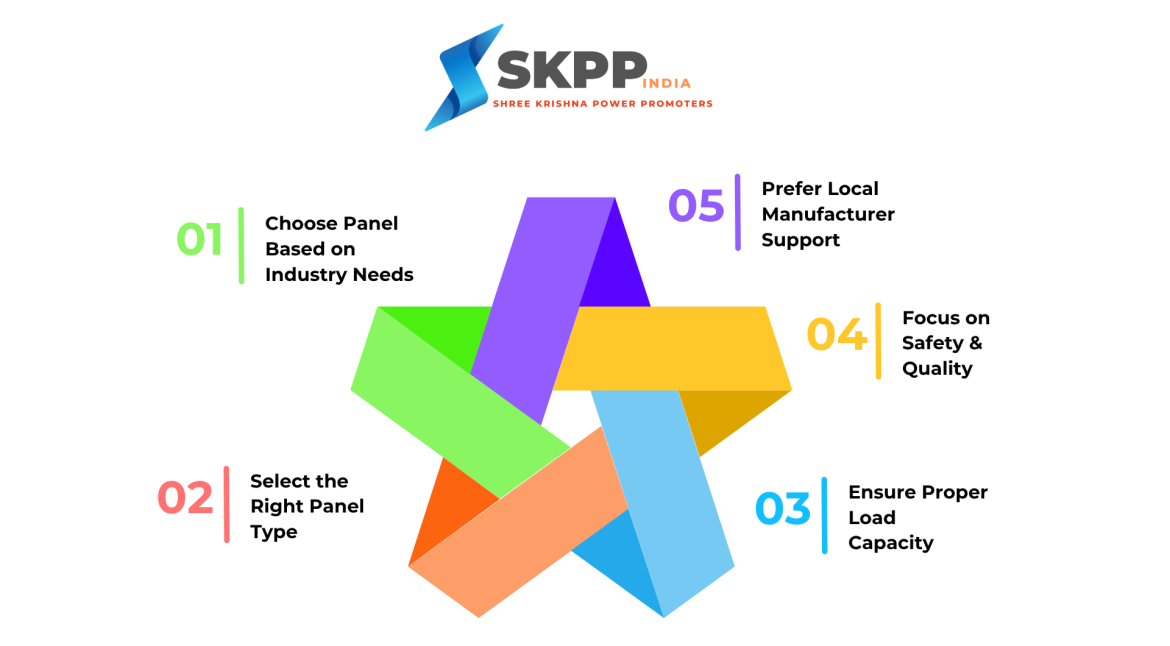
Selecting the right electrical control panel is one of the most critical decisions for any industrial or commercial setup. Whether you run a manufacturing unit, a processing plant, or a commercial facility in Indore, the efficiency, safety, and reliability of your operations largely depend on the control panel you choose. With rapid industrial growth in Indore, businesses now require advanced, customized, and energy-efficient control panel solutions. In this guide, we will help you understand how to choose the right control panel for your industry in Indore, ensuring optimal performance, safety, and long-term cost savings.
Understanding the Role of a Control Panel
An electrical control panel is a centralized unit that manages and controls electrical power within a system. It houses various electrical components such as circuit breakers, relays, switches, and automation devices that work together to regulate machinery and equipment. In industrial setups, control panels play a vital role in ensuring that processes run smoothly and safely. They help in monitoring performance, controlling operations, and preventing electrical faults. Without a properly designed control panel, businesses may face frequent breakdowns, safety hazards, and reduced productivity.
Identifying Industry-Specific Requirements
Every industry has its own unique requirements when it comes to electrical systems, and understanding these requirements is the first step in selecting the right control panel. For instance, manufacturing industries in Indore often require advanced automation systems to improve efficiency and reduce manual intervention, while commercial buildings may focus more on safe and reliable power distribution. Industries that rely heavily on motors need specialized electric panels that can handle motor operations efficiently. It is also important to consider factors such as the type of machinery being used, the level of automation required, and the possibility of future expansion. A clear understanding of these aspects helps in choosing a panel that aligns perfectly with your operational needs.
Importance of Choosing the Right Type of Panel
Different types of control panels are designed for different applications, and selecting the appropriate type is essential for optimal performance. Power control panels are commonly used for managing and distributing electrical power across large systems, making them suitable for industries with high energy demands. Motor control panels are specifically designed to control and monitor motors, which are widely used in manufacturing and processing industries. Programmable logic controller panels are ideal for automation and are widely used in industries that require precision and efficiency. There are also panels designed to improve energy efficiency by maintaining a stable power factor, which is particularly useful for businesses looking to reduce electricity costs. Understanding these variations helps in making an informed decision.
Evaluating Load Capacity and Power Needs
One of the most critical factors in choosing a control panel is evaluating the load capacity and overall power requirements of your facility. The panel must be capable of handling the total electrical load without the risk of overloading or failure. If the panel is not designed to handle the required load, it can lead to frequent tripping, equipment damage, and even safety hazards. On the other hand, choosing a panel with excessive capacity can increase initial costs unnecessarily. It is important to carefully assess the total connected load, maximum demand, and any potential increase in load in the future. This ensures that the panel is both efficient and scalable.
Ensuring Safety and Compliance
Safety is a top priority when dealing with electrical systems, and the control panel you choose must meet all relevant safety standards and regulations. In India, electrical panels should comply with established guidelines to ensure safe operation. A well-designed control panel includes essential safety features such as proper insulation, overload protection, short-circuit protection, and effective earthing. These features not only protect equipment but also ensure the safety of workers and the facility. Choosing a panel from a reliable manufacturer that follows industry standards helps in minimizing risks and ensuring compliance with regulations.
Importance of Build Quality and Components
The quality of materials and components used in a control panel directly impacts its performance and durability. High-quality panels are built using robust enclosures and reliable components that can withstand harsh industrial conditions. In cities like Indore, where industries often operate in environments with dust, heat, and moisture, it is important to choose panels that are designed to handle such conditions. A well-built panel not only ensures long-term reliability but also reduces maintenance requirements. Investing in quality components may have a higher initial cost, but it provides better performance and cost savings in the long run.
Customization for Better Performance
Every business has unique operational needs, and a standard control panel may not always meet those requirements. Customization plays a crucial role in ensuring that the panel is tailored to your specific applications. A customized control panel can be designed to fit your space, integrate with existing systems, and include advanced features such as automation and remote monitoring. This level of flexibility allows businesses to optimize their operations and improve overall efficiency. Working with a manufacturer that offers customized solutions ensures that you get a panel that perfectly matches your requirements.
Energy Efficiency and Cost Optimization
Energy efficiency has become a major concern for industries, especially with rising electricity costs. A well-designed control panel can help optimize energy usage and reduce overall expenses. Panels that include energy-saving features can improve efficiency and minimize wastage. For example, systems that maintain a balanced power factor can significantly lower electricity bills. Automation features also contribute to energy savings by ensuring that machines operate only when needed. In a competitive industrial environment like Indore, adopting energy-efficient solutions can provide a significant advantage.
Importance of Maintenance and Support
A control panel requires regular maintenance to ensure smooth and uninterrupted operation. Choosing a panel from a manufacturer that provides reliable after-sales support is essential. Maintenance services help in identifying potential issues before they become major problems, reducing downtime and repair costs. Quick access to technical support and spare parts is also important for maintaining efficiency. Businesses should always consider the availability of service support when selecting a control panel supplier, as this plays a key role in long-term performance.
Benefits of Choosing a Local Manufacturer in Indore
Selecting a local control panel manufacturer offers several advantages that can benefit your business. Local manufacturers have a better understanding of the specific needs and challenges faced by industries in Indore. They can provide faster service, easier communication, and quick on-site support when required. Additionally, working with a local supplier can reduce transportation costs and lead times. This makes it easier to manage installation, maintenance, and future upgrades. For businesses in Indore, choosing a local manufacturer is often a practical and efficient decision.
Balancing Cost and Quality
While budget is an important consideration, it should not be the sole factor in choosing a control panel. Opting for the cheapest option may lead to compromises in quality, resulting in higher maintenance costs and reduced lifespan. It is important to focus on overall value rather than just initial cost. A high-quality control panel may require a larger investment upfront, but it provides better performance, reliability, and long-term savings. Striking the right balance between cost and quality ensures that you make a smart and sustainable investment.
Avoiding Common Mistakes
Many businesses make common mistakes when selecting control panels, which can lead to operational issues and increased costs. One of the most common mistakes is not considering future expansion, which can result in the need for costly upgrades later. Another mistake is choosing low-quality components to save money, which often leads to frequent breakdowns. Ignoring safety standards and failing to evaluate the manufacturer’s expertise are also common errors. Being aware of these pitfalls helps businesses make better decisions and avoid unnecessary complications.
Conclusion
Choosing the right control panel provider for your industry in Indore is a decision that requires careful planning and consideration. From understanding your specific requirements to evaluating safety, quality, and energy efficiency, every factor plays a crucial role in ensuring optimal performance. A well-designed control panel not only improves operational efficiency but also enhances safety and reduces long-term costs. By working with a reliable manufacturer and focusing on quality and customization, businesses can ensure that their electrical systems are efficient, reliable, and future-ready. Investing in the right control panel is not just a technical decision but a strategic move that supports the growth and success of your business.
FAQs
1. Which control panel is best for manufacturing industries?
MCC and PLC panels are commonly used in manufacturing industries for motor control and automation.
2. How do I calculate the required panel capacity?
You need to calculate total connected load, maximum demand, and future expansion requirements.
3. Why is an APFC panel important?
APFC panels help improve power factor, reduce electricity bills, and avoid penalties.
4. How often should a control panel be maintained?
Regular maintenance should be done every 3–6 months depending on usage and environment.
5. Can control panels be customized?
Yes, most manufacturers offer customized solutions based on your industry requirements.