
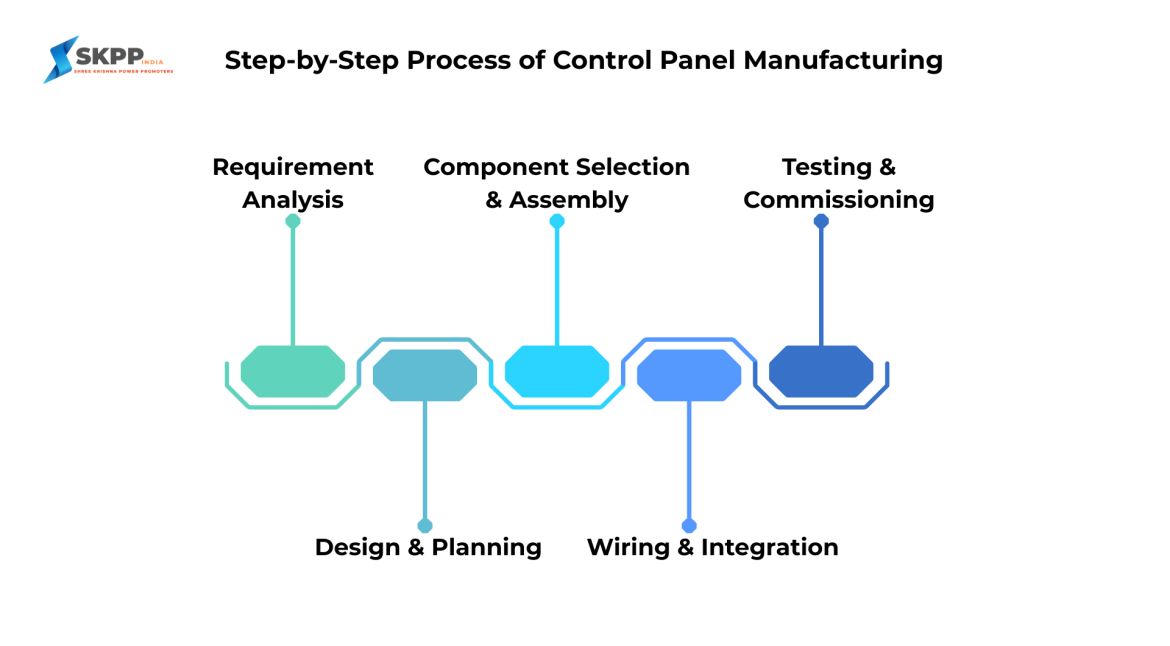
Control panel manufacturing is a critical process in industrial automation and electrical distribution systems. These panels act as the brain of machinery, controlling and monitoring operations efficiently. From small-scale industries to large manufacturing plants, control panels ensure safety, reliability, and seamless functioning of electrical equipment. Understanding the step-by-step process of control panel manufacturing helps businesses choose the right solutions and ensures high-quality production standards. This guide explains each stage in detail, from design to final testing, providing a complete overview of how control panels are built.
Understanding Client Requirements and Specifications
The first step in control panel manufacturing begins with gathering detailed client requirements. This stage is essential because every industry has unique operational needs. Engineers and designers communicate with clients to understand factors such as voltage requirements, type of application, environmental conditions, and safety standards. Additionally, they identify the components required, including circuit breakers, relays, PLCs, and HMIs. Proper documentation is created during this phase, which acts as a blueprint for the entire manufacturing process. Without clear specifications, the final product may fail to meet operational expectations.
Designing the Control Panel Layout
Once the requirements are finalized, the next step is designing the control panel layout. Engineers use specialized software tools to create detailed electrical schematics and panel layouts. These designs include wiring diagrams, component placement, and panel dimensions. The goal is to ensure optimal space utilization, proper heat dissipation, and ease of maintenance. A well-designed electric panel not only enhances performance but also reduces the chances of electrical faults. During this stage, designers also ensure compliance with industry standards and safety regulations.
Selection of Components and Materials
After completing the design, the next step involves selecting the right components and materials. This includes choosing high-quality switches, relays, contactors, terminals, cables, and enclosures. The selection depends on factors such as load capacity, durability, and environmental conditions. For example, panels used in harsh environments require dustproof and waterproof enclosures. Using reliable components ensures long-term performance and minimizes maintenance issues. Manufacturers often source components from trusted suppliers to maintain quality and consistency.
Panel Enclosure Fabrication
The enclosure is the outer body of the control panel that protects internal components from external damage. In this step, the enclosure is fabricated using materials like mild steel, stainless steel, or aluminum. The fabrication process includes cutting, bending, welding, and drilling to match the design specifications. Proper ventilation and mounting provisions are also included during this stage. A strong and well-built enclosure enhances safety and ensures the panel can withstand environmental challenges such as heat, moisture, and dust.
Mounting of Components Inside the Panel
Once the enclosure is ready, the next step is mounting all electrical components inside the panel. Components are placed according to the design layout to ensure proper spacing and accessibility. DIN rails, mounting plates, and cable trays are used to organize the components efficiently. Proper alignment and secure fixing are crucial to prevent vibrations and ensure long-term stability. This step requires precision and expertise, as incorrect placement can lead to operational inefficiencies or safety hazards.
Wiring and Cable Management
Wiring is one of the most critical steps in control panel manufacturing. Skilled technicians connect all components using appropriate cables and wires. Each connection is made according to the wiring diagram to ensure correct functionality. Proper cable management techniques, such as bundling, labeling, and routing, are used to maintain organization and avoid confusion during maintenance. High-quality insulation and proper grounding are also essential to prevent electrical faults and ensure safety. Neat and well-organized wiring enhances the overall reliability of the panel.
Integration of Automation Systems
Modern control panels often include automation systems such as PLCs, SCADA, and HMI interfaces. During this stage, these systems are integrated into the panel and configured according to the application requirements. Programmable Logic Controllers (PLCs) are programmed to control various operations, while Human-Machine Interfaces (HMIs) allow operators to monitor and control processes easily. Proper integration ensures seamless communication between different components and improves operational efficiency.
Testing and Quality Inspection
Before the control panel is delivered, it undergoes rigorous testing and quality inspection. This step ensures that all components and connections are functioning correctly. Tests include continuity testing, insulation resistance testing, and functional testing. Engineers also check for proper voltage levels, load handling, and safety compliance. Any issues identified during testing are rectified immediately. Quality inspection ensures that the panel meets industry standards and performs reliably under real-world conditions.
Finishing and Labeling
After successful testing, the panel undergoes finishing processes such as painting, polishing, and labeling. Labels are added to all components, switches, and terminals to make identification easier. Proper labeling is essential for maintenance and troubleshooting. The finishing process also enhances the appearance of the panel and provides additional protection against environmental factors. A well-finished panel reflects professionalism and quality workmanship.
Packaging and Delivery
Once the panel is fully assembled and tested, it is carefully packaged to prevent damage during transportation. Protective materials are used to safeguard the panel from shocks and environmental exposure. The panel is then delivered to the client’s site along with necessary documentation, including wiring diagrams and user manuals. Proper packaging and handling ensure that the panel reaches the client in perfect condition.
Installation and Commissioning
The final step in the process is installation and commissioning at the client’s location. Skilled technicians install the panel and connect it to the electrical system. After installation, the panel is tested again to ensure it operates correctly in the actual working environment. Commissioning includes verifying all functions, calibrating systems, and training operators. This step ensures that the control panel performs efficiently and meets the client’s expectations.
Importance of Following a Structured Manufacturing Process
A step-by-step approach to control panel manufacturing ensures consistency, quality, and safety. Each stage plays a crucial role in delivering a reliable product. Skipping or neglecting any step can lead to operational failures or safety risks. By following a structured process, manufacturers can deliver high-performance control panels that meet industry standards and client requirements.
Conclusion
Control panel manufacturing is a complex yet well-structured process that involves multiple stages, from requirement analysis to final commissioning. Each step requires precision, expertise, and adherence to quality standards. By understanding this process, businesses can make informed decisions when choosing a control panel manufacturer. A well-designed and properly manufactured control panel not only improves operational efficiency but also ensures safety and long-term reliability.
FAQs
1. What is a control panel used for?
A control panel is used to manage and control electrical systems and machinery in industrial and commercial applications.
2. How long does it take to manufacture a control panel?
The time depends on the complexity and size of the panel, but it typically ranges from a few days to several weeks.
3. What are the main components of a control panel?
Key components include circuit breakers, relays, contactors, PLCs, switches, and wiring systems.
4. Why is testing important in control panel manufacturing?
Testing ensures that the panel functions correctly, meets safety standards, and performs reliably under real conditions.
5. Can control panels be customized?
Yes, control panels are fully customizable based on specific industrial requirements and applications.