
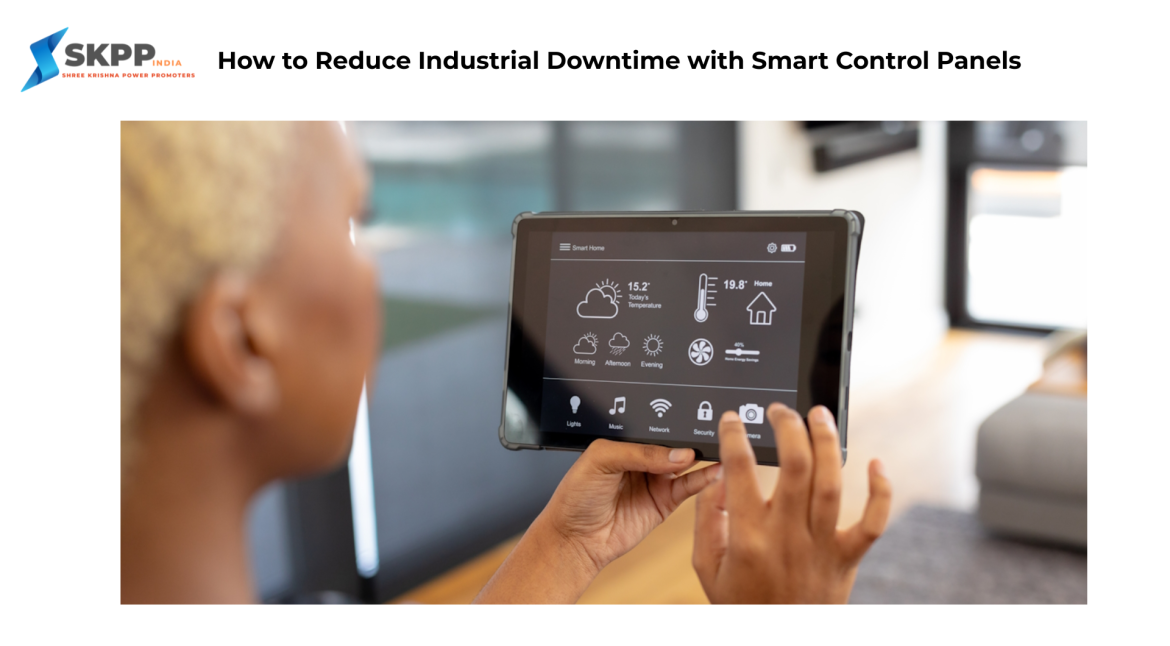
Industrial downtime is one of the biggest challenges faced by manufacturing plants, factories, and industrial facilities. When machines stop working unexpectedly, businesses experience production delays, financial losses, increased maintenance costs, and lower customer satisfaction. In today’s competitive industrial environment, companies are constantly searching for smarter solutions to improve efficiency and reduce operational interruptions. One of the most effective solutions is the use of smart control panels. Smart control panels are advanced electrical systems designed to automate, monitor, and manage industrial operations efficiently. These systems combine intelligent automation, real-time monitoring, safety protection, and data analytics to improve overall plant performance. Unlike traditional control panels, smart panels can identify potential issues before they become serious problems, helping industries minimize downtime and maintain smooth operations.
Real-Time Monitoring Improves Equipment Reliability
One of the major causes of industrial downtime is sudden equipment failure. Traditional systems often fail without warning, leading to unexpected production shutdowns. Smart control panels solve this problem through continuous real-time monitoring of machines and electrical systems. These panels track important parameters such as voltage, current, temperature, pressure, motor performance, and load conditions. With real-time monitoring, operators can quickly detect abnormal behavior in machines before a complete breakdown occurs. For example, if a motor starts overheating or consuming unusual power, the smart panel instantly sends alerts to the maintenance team. Early detection allows technicians to take corrective action before the issue causes a production halt. This proactive monitoring significantly improves equipment reliability and reduces unplanned downtime.
Predictive Maintenance Prevents Unexpected Failures
Traditional maintenance methods are usually based on fixed schedules, which may not reflect the actual condition of equipment. Sometimes machines are serviced too early, increasing maintenance costs, while other times warning signs are missed, resulting in sudden failures. Smart control panels help industries move toward predictive maintenance. These advanced systems use sensors and intelligent software to continuously analyze machine performance and operational data. By identifying patterns and detecting signs of wear or stress, smart control panels can predict when a component is likely to fail. Maintenance teams receive alerts in advance, allowing them to replace or repair parts before a breakdown happens. Predictive maintenance reduces unnecessary servicing, minimizes repair costs, and prevents unexpected equipment failures. It also extends the lifespan of industrial machinery and ensures uninterrupted operations.
Automation Reduces Human Errors
Human errors are another common reason for industrial downtime. Manual operations can lead to incorrect settings, delayed responses, and operational mistakes that disrupt production processes. Smart control panels improve efficiency through automation. Modern control panels can automatically manage industrial operations such as motor control, process sequencing, load balancing, and fault handling. Automated systems respond much faster than manual operators and maintain consistent performance throughout production cycles. In case of faults or abnormal conditions, the control panel can automatically shut down affected systems to prevent further damage. Automation not only reduces operational errors but also improves productivity and ensures smoother industrial workflows. By reducing dependency on manual intervention, industries can maintain stable and reliable operations.
Remote Access Helps Faster Problem Resolution
Smart control panels are often integrated with Industrial Internet of Things (IIoT) technology, allowing remote monitoring and control of industrial systems. This feature is extremely useful for large industries and businesses operating multiple plants or remote facilities. Through remote access, engineers and plant managers can monitor equipment performance from any location using computers, tablets, or smartphones. If a problem occurs, technicians can quickly analyze the issue, receive alerts, and take corrective actions without physically visiting the site. Remote troubleshooting reduces response times and prevents long production interruptions. It also improves maintenance efficiency and helps businesses maintain continuous operations even in challenging situations.
Data Analytics Enhances Operational Efficiency
Smart control panels continuously collect data from machines, sensors, and industrial processes. This operational data provides valuable insights into equipment performance, energy usage, production efficiency, and maintenance requirements. Advanced analytics tools within the control panel help industries identify inefficiencies and recurring issues. For example, if a particular machine repeatedly shows high vibration levels during specific operations, the system can alert operators to inspect the machine before serious damage occurs. Data-driven insights help businesses optimize industrial processes, improve decision-making, and reduce the chances of unexpected downtime. Better operational visibility also helps plant managers improve overall productivity and resource utilization.
Energy Management Reduces Electrical Failures
Electrical issues such as overloads, voltage fluctuations, and unstable power supply can cause severe equipment damage and production stoppages. Smart control panels include advanced energy management systems that monitor power consumption and electrical performance in real time. These systems help maintain stable voltage levels, balance electrical loads, and identify irregular power conditions before they affect machinery. Efficient energy management reduces the risk of electrical failures and improves the reliability of industrial equipment. In addition to reducing downtime, smart energy management also helps industries lower electricity costs and improve energy efficiency. Businesses can achieve both operational and financial benefits through optimized power usage.
Advanced Safety Features Protect Equipment and Workers
Industrial safety is extremely important in manufacturing and processing environments. Accidents, electrical faults, and equipment failures can not only stop production but also put workers at risk. Smart control panels are designed with advanced safety mechanisms to protect both machinery and personnel. These panels include features such as overload protection, emergency shutdown systems, fault isolation, temperature monitoring, and circuit protection. In hazardous situations, the control system can automatically disconnect affected equipment and send immediate alerts to operators. By preventing accidents and minimizing equipment damage, smart control panels improve workplace safety and reduce downtime caused by safety incidents. A safer work environment also helps industries maintain compliance with industrial safety standards.
Faster Troubleshooting Minimizes Downtime
Traditional industrial systems often require manual inspection to identify faults, which can take a significant amount of time. Smart control panels simplify troubleshooting by providing detailed diagnostic information and error notifications. When a fault occurs, the control panel quickly identifies the source of the problem and displays error codes or warning messages. Some advanced systems even include self-diagnostic capabilities that automatically detect faulty components. This faster troubleshooting process allows maintenance teams to resolve issues more efficiently and restore operations quickly. Reduced repair time means lower downtime and improved production continuity.
Seamless Integration with Industrial Automation Systems
Modern industries use multiple machines, automation systems, PLCs, and SCADA platforms that need to work together efficiently. Smart control panels support various communication protocols such as Modbus, Ethernet/IP, and Profibus, allowing smooth integration with industrial automation networks. Integrated systems improve communication between machines and ensure coordinated operations across the entire facility. Better synchronization reduces delays, improves process control, and minimizes operational disruptions. Seamless integration also allows industries to scale operations more easily and upgrade systems without major production interruptions.
Durability in Harsh Industrial Environments
Many industries operate in difficult environments exposed to dust, moisture, heat, vibration, or corrosive chemicals. These harsh conditions can damage traditional control systems and increase the risk of downtime. Smart control panels are built with durable enclosures and advanced cooling systems to withstand demanding industrial conditions. Their robust design ensures reliable performance even in challenging environments such as manufacturing plants, mining facilities, and oil and gas industries. Reliable hardware construction reduces maintenance requirements and helps businesses maintain continuous industrial operations.
Cost Savings Through Reduced Downtime
Although smart control panels require an initial investment, they provide significant long-term cost savings. Reduced downtime means fewer production losses, lower maintenance expenses, improved energy efficiency, and longer equipment lifespan. Businesses can also reduce labor costs through automation and remote monitoring capabilities. Improved productivity and operational reliability contribute to a higher return on investment over time. Industries that implement smart control panels often experience improved profitability and stronger operational performance compared to facilities using traditional control systems.
Future of Smart Control Panels in Industry 4.0
As industries continue moving toward Industry 4.0 and digital transformation, smart control panels will become even more advanced. Technologies such as artificial intelligence, machine learning, and cloud computing are making industrial automation smarter and more efficient. Future smart control systems will offer enhanced predictive maintenance, autonomous decision-making, and real-time connectivity across industrial networks. These innovations will further reduce downtime, improve productivity, and support fully automated industrial environments. Businesses that invest in smart technologies today will be better prepared for the future of industrial automation and competitive manufacturing.
Conclusion
Industrial downtime can lead to major financial losses, delayed production, and reduced operational efficiency. Smart control panels provide an effective solution by combining automation, real-time monitoring, predictive maintenance, energy management, and advanced safety features into a single intelligent system. These advanced control systems help industries detect problems early, prevent equipment failures, improve workplace safety, and optimize industrial operations. By reducing downtime and improving productivity, smart control panels allow businesses to operate more efficiently and remain competitive in modern industrial markets. As industrial technology continues to evolve, smart control panels will play an increasingly important role in helping industries achieve reliable, safe, and uninterrupted operations.