
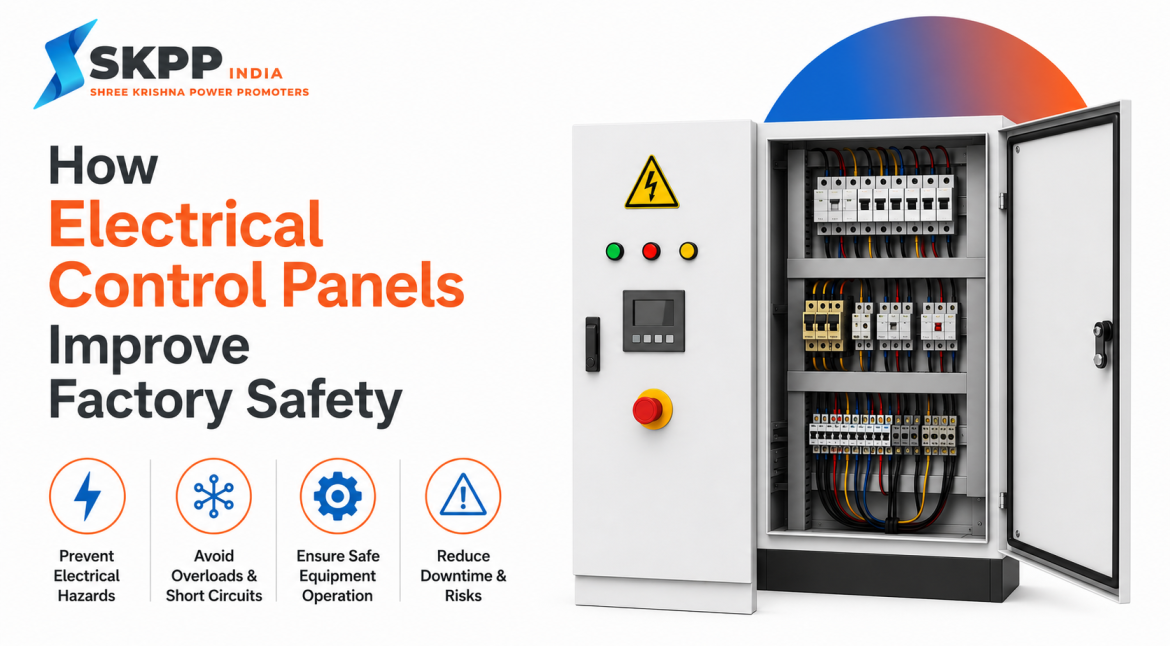
Factory safety is one of the most important priorities in any industrial environment. Whether it is a manufacturing plant, processing facility, warehouse, or production unit, electrical systems power almost every machine and process. However, poorly managed electrical systems can lead to equipment failures, unexpected downtime, electrical fires, and serious workplace accidents. This is where electrical control panels play a crucial role. They act as the central hub for monitoring, controlling, and protecting industrial equipment, ensuring that machines operate safely and efficiently. Modern electrical control panels are designed with advanced protection features that not only improve operational efficiency but also create a safer working environment for employees.
Centralized Control Reduces Human Error
One of the biggest advantages of electrical control panels is centralized control. Instead of operators manually handling multiple switches and electrical components scattered across the factory, they can monitor and control various machines from a single panel. This organized approach minimizes confusion and significantly reduces the risk of human error. Operators can quickly identify the status of equipment, start or stop machinery safely, and respond to abnormal conditions without unnecessary delays. By simplifying machine management, electrical control panels help prevent operational mistakes that could lead to workplace accidents.
Protection Against Electrical Faults
Electrical faults such as short circuits, overloads, and voltage fluctuations can cause severe damage to machinery and pose serious safety risks. High-quality electrical control panels are equipped with protective devices like circuit breakers, fuses, overload relays, and surge protection systems. These components automatically disconnect the power supply whenever an unsafe condition is detected, preventing equipment damage and reducing the risk of electrical fires. Early fault detection also helps maintenance teams resolve issues before they become major problems, improving both safety and equipment reliability.
Emergency Shutdown for Critical Situations
Industrial environments often require immediate action when unexpected situations occur. Electrical control panels include emergency stop systems that allow operators to shut down machinery instantly during emergencies. Whether there is a mechanical failure, electrical malfunction, or safety hazard involving workers, emergency shutdown buttons can stop equipment within seconds. This rapid response capability helps prevent injuries, limits equipment damage, and protects nearby workers from dangerous situations. An effective emergency shutdown system is an essential part of every factory’s overall safety strategy.
Continuous Equipment Monitoring
Modern electrical control panels provide real-time monitoring of equipment performance. Sensors and monitoring devices continuously track parameters such as voltage, current, temperature, pressure, and motor performance. If any reading exceeds safe operating limits, the control panel immediately alerts operators through warning lights, alarms, or digital displays. Early detection allows maintenance teams to investigate and resolve issues before they cause machine failure or create hazardous working conditions. Continuous monitoring not only improves safety but also extends the lifespan of industrial equipment.
Preventing Equipment Overloading
Overloaded motors and electrical systems are among the leading causes of industrial equipment failure. Electrical control panels continuously monitor electrical loads and automatically prevent machinery from operating beyond its designed capacity. Overload protection relays disconnect equipment before overheating occurs, protecting motors from permanent damage. By maintaining proper operating conditions, control panels reduce maintenance costs, minimize production interruptions, and create a safer environment for workers operating nearby machinery.
Improved Worker Safety Around Machinery
Industrial machinery often contains moving parts, high voltages, and automated systems that require strict safety controls. Electrical control panels integrate with safety devices such as interlocks, safety switches, light curtains, and emergency sensors to ensure machines only operate under safe conditions. For example, certain machines may automatically stop when protective guards are opened or when someone enters a restricted operating area. These integrated safety features significantly reduce the risk of accidental injuries while allowing production to continue efficiently.
Supporting Preventive Maintenance
Regular maintenance is essential for maintaining factory safety, and electrical control panels make this process much easier. Many advanced panels record operational data, fault history, and equipment performance over time. Maintenance teams can use this information to identify components that require servicing before they fail. Predictive maintenance reduces unexpected breakdowns, improves equipment reliability, and prevents hazardous situations caused by worn or damaged electrical components. A proactive maintenance approach ultimately leads to a safer and more productive workplace.
Compliance with Industrial Safety Standards
Factories must comply with national and international electrical safety standards to protect employees and maintain regulatory compliance. Professionally designed electrical control panels are built according to recognized standards such as IEC, UL, and other industry-specific regulations. These standards ensure that electrical components are installed correctly, properly insulated, and safely enclosed. Compliance not only reduces legal risks but also demonstrates a company’s commitment to workplace safety and operational excellence.
Supporting Industrial Automation Safely
As factories increasingly adopt automation technologies, electrical control panels become even more important. They coordinate communication between programmable logic controllers (PLCs), sensors, motors, drives, and automated production equipment. Advanced automation reduces the need for workers to perform dangerous manual tasks while maintaining precise control over industrial processes. Safety features built into automated control panels ensure machines operate within predefined limits, reducing the likelihood of accidents while improving production efficiency.
Long-Term Benefits for Factory Operations
Investing in high-quality electrical control panels provides benefits that extend far beyond basic machine control. Improved safety reduces workplace injuries, minimizes downtime, lowers maintenance expenses, and protects valuable production equipment. Reliable electrical protection also increases equipment lifespan and ensures uninterrupted operations, helping manufacturers maintain consistent productivity. A safer factory environment boosts employee confidence and contributes to better overall operational performance.
Conclusion
Electrical control panels are the foundation of safe and efficient industrial operations. By centralizing machine control, protecting against electrical faults, enabling emergency shutdowns, monitoring equipment continuously, preventing overloads, and supporting preventive maintenance, they significantly improve factory safety. As industries continue to adopt advanced automation and smart manufacturing technologies, modern electrical control panels will remain essential for protecting both workers and equipment. Businesses that invest in well-designed, standards-compliant control panels create a safer workplace, reduce operational risks, and build a more reliable and productive manufacturing environment.